Hear the patient
before the
1-star review.
NPS (Net Promoter Score) measures patient satisfaction and anticipates your online reputation. NPSLab asks at the right moment, resolves detractors in private and turns promoters into 5-star reviews.
A dissatisfied patient rarely complains — they simply never return.
In healthcare, the choice of the next visit runs through reviews on Google and Doctoralia. A patient who felt poorly welcomed and was not heard becomes a public review that scares away dozens of future patients. NPS is the early warning system: it captures dissatisfaction while there is still time to care for the experience.
A dissatisfied patient rarely complains at the front desk.
They stay silent on the way out — and pour everything into a public review days later, when it is already too late to fix.
Wait time turns into a complaint
The biggest complaint at clinics is the wait. You only find out about the problem when it is already in the Google stars — public and permanent.
Promoters who disappear
Satisfied patients rarely review on their own. Without an invitation at the right moment, your best reputation stays invisible.
Silent churn, no visibility
In healthcare, the dissatisfied patient does not return — and does not say why. Without structured feedback, you lose them without knowing the reason.
Hear the patient at every stage of care
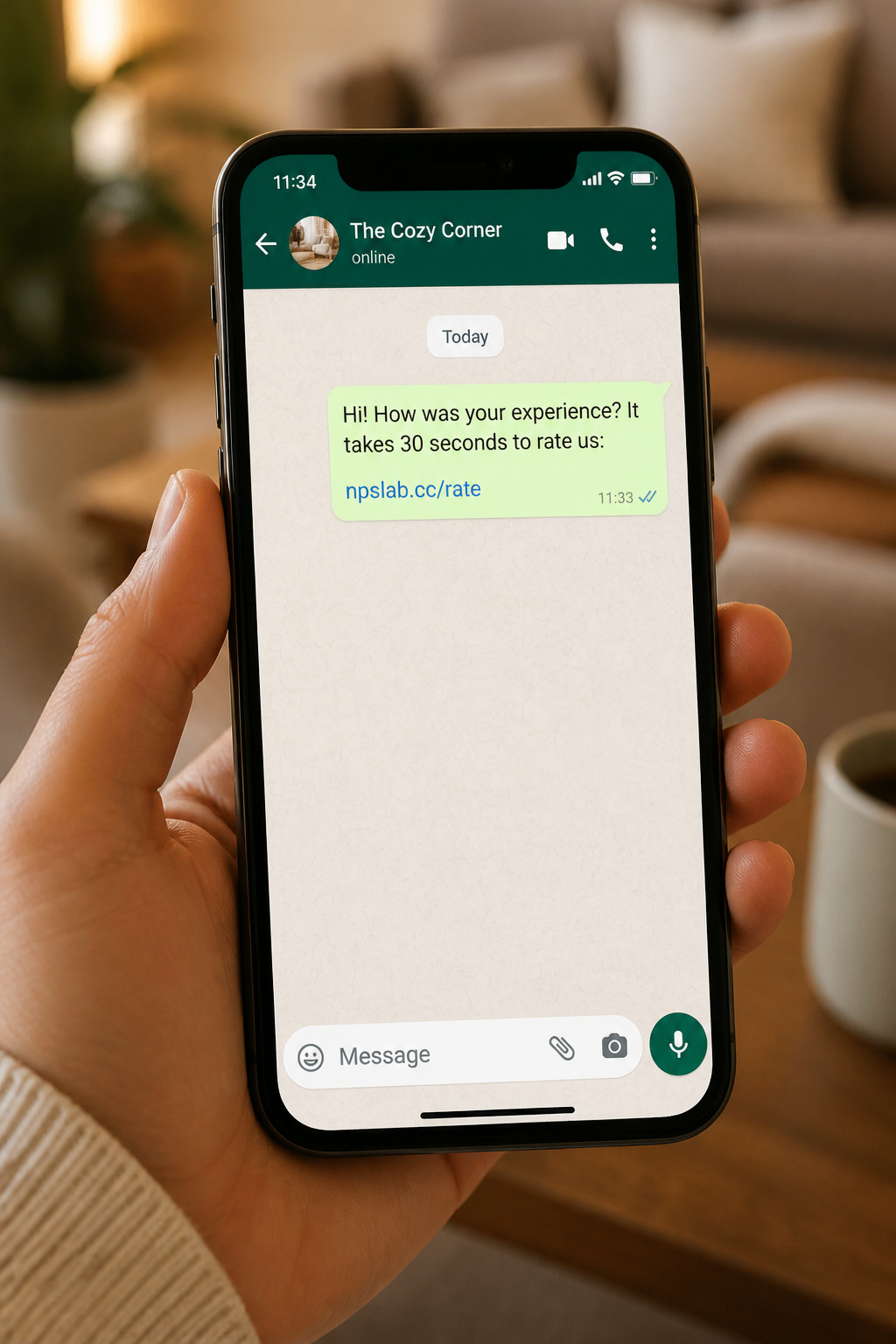
NPSLab sends the right survey at the right moment — by WhatsApp, email, SMS or a QR code at the front desk.
Scheduling
Confirm the appointment and align expectations before the patient arrives.
Front desk
Rate the welcome, the check-in speed and the comfort of the wait.
Key moment
Capture the perception right after the appointment — the experience is still fresh.
Post-visit
A QR code at the front desk captures the score and opens space for a comment.
Follow-up
Promoters are invited to review on Google and Doctoralia. Detractors are heard in private.
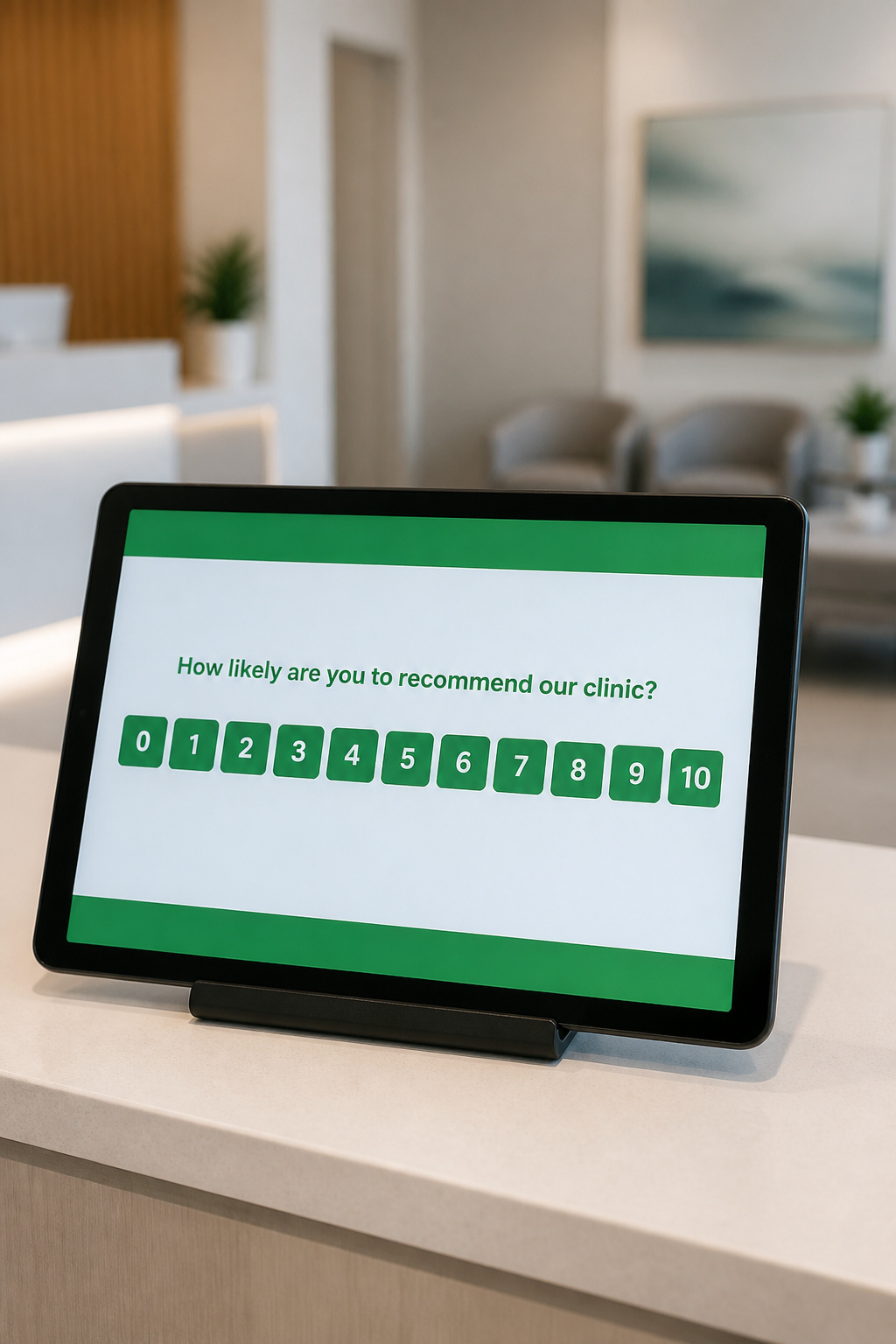
A tablet at the front desk turns the patient’s view into a signal
Right after the appointment, the patient rates the care experience in seconds on the front-desk tablet, while the impression is still fresh. Promoters are invited to leave a review on Google and Doctoralia, strengthening your online reputation and bringing patients back; detractors trigger an instant alert so the team can listen before dissatisfaction turns into a public review.
What changes when you listen at the right moment
They spotted wait time as the main complaint in surveys. After reorganizing the schedule and communicating delays, NPS rose from 48 to 76.
They started inviting only promoters to review. Google reviews rose from 4.2 to 4.9 stars in six months.
With real-time detractor alerts, 1 in 3 dissatisfied patients was contacted and heard before reviewing publicly.
Built for clinics and practices
Real-time detractor alert
Low score? Your team is notified instantly by app push or email to welcome the patient before it becomes a public review.
NPS by professional and area
See satisfaction broken down by physician, front desk and wait time. Know exactly where to invest.
Multi-channel
WhatsApp, SMS, email and a QR code at the front desk. Reach the patient where they respond.
More 5-star reviews
Promoters are sent straight to Google and Doctoralia. Your reputation grows with those who truly liked it.
NPS for clinics, no mystery
What is NPS for clinics?
NPS (Net Promoter Score) is the metric that measures how likely a patient is to recommend your clinic, on a scale of 0 to 10. In the healthcare sector, it anticipates online reputation: promoter patients tend to leave positive reviews, while detractors can hurt your image on Google and Doctoralia if they are not heard in time.
What is a good NPS for clinics?
According to the Wellon 2024 survey of 642,561 patients, the NPS of healthcare services in Brazil ranges from 56.5 (Midwest) to 75.5 (North). The global median in healthcare is 61 points (Survicate, 2025). Above 70 is already considered the excellence zone for the sector.
How does NPS help improve the patient experience?
NPSLab identifies promoter patients in real time and invites them to leave a review on Google or Doctoralia, while detractors are heard in private. The focus is on patient experience and satisfaction — there is no promise of a clinical outcome.
When should I send the NPS survey to the patient?
The ideal time is between 24 and 48 hours after the visit, when the experience is still fresh. Useful moments include post-appointment, treatment follow-up and the return visit. NPSLab automates sending by WhatsApp, SMS or email.
Your next 5-star review starts today
Set up your first survey in 5 minutes. Start free, no card.