Spot dissatisfaction
before the
cancellation request.
Telecom has the lowest NPS of any industry (average 2-30). NPSLab listens to the subscriber at install, support and renewal, resolves detractors before they cancel and cuts churn.
A cancellation costs far more than one monthly bill.
In a price war, customer experience is the only sustainable differentiator. More than half of providers have churn above 4% per year, and customers usually cancel with no warning. NPS is the early warning system: it captures dissatisfaction while there is still time to turn it around.
A dissatisfied subscriber rarely warns you before cancelling.
They pile up support tickets in silence — and request the cancellation all at once, once they have already compared prices with a competitor.
Surprise cancellation
The provider only finds out about the dissatisfaction once the customer is lost. With no alert, there is no chance to turn the situation around.
Repetitive complaints
The same issue reported by several customers in the same neighborhood. Support is overloaded without seeing the real impact on satisfaction.
Many regions, zero visibility
Comparing satisfaction by neighborhood, plan or point of presence turns into a spreadsheet — and nobody looks at it in time to act.
Hear the subscriber at every stage of the journey
NPSLab sends the right survey at the right moment — by WhatsApp, email, SMS or a link on the invoice.
First 48h
The first hours are critical. Make sure the initial experience is positive and prevent cancellation in the first 30 days.
Onboarding
Confirm that speed and stability deliver what was promised at sign-up.
Key moment
Rate every technical service call right after support — there is time to fix things before dissatisfaction builds up.
Proactive
A periodic survey by region and plan catches network problems before the customer complains.
Before the increase
Customers informed proactively before a price increase are 2x more likely to stay.
The survey reaches the subscriber in the palm of their hand
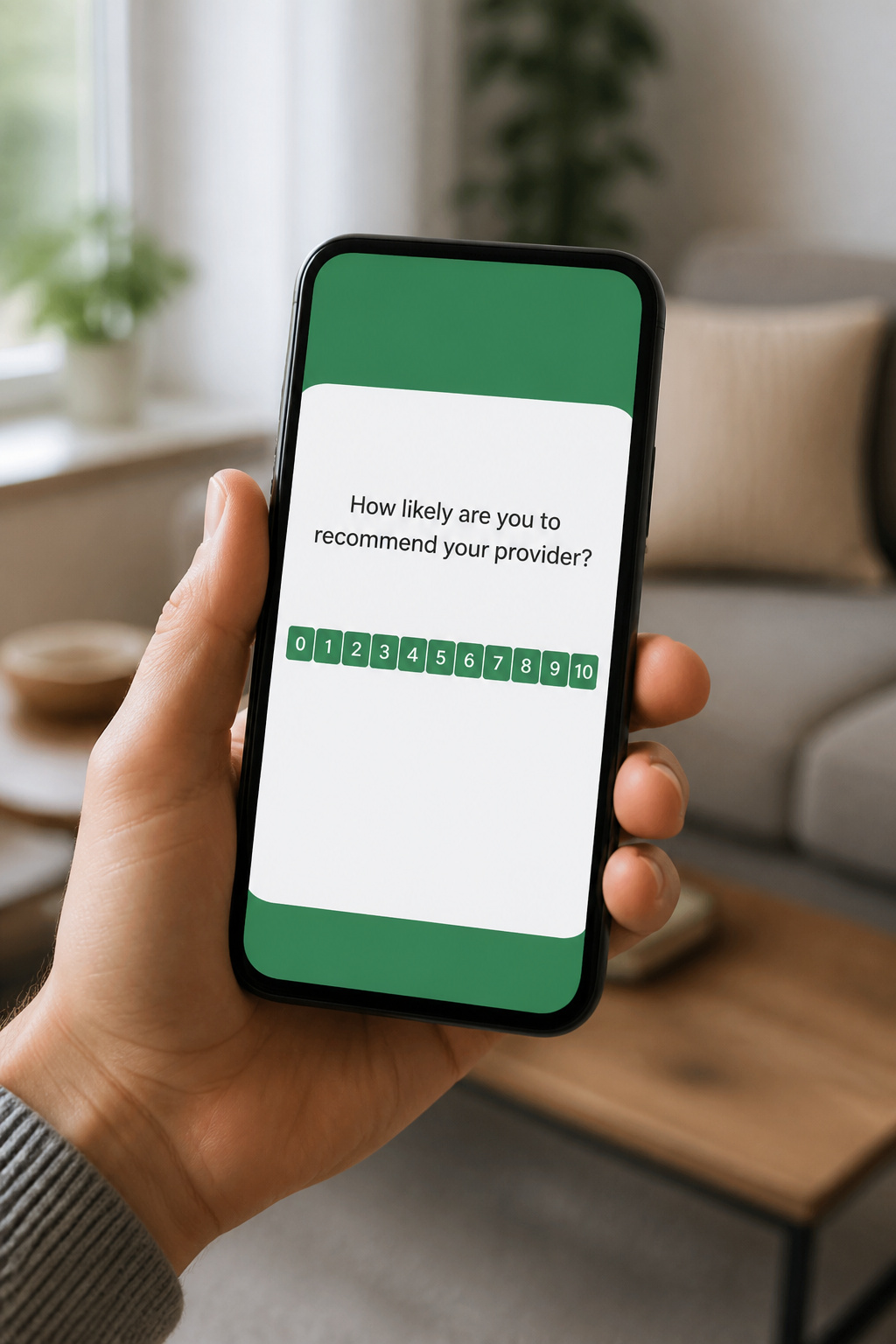
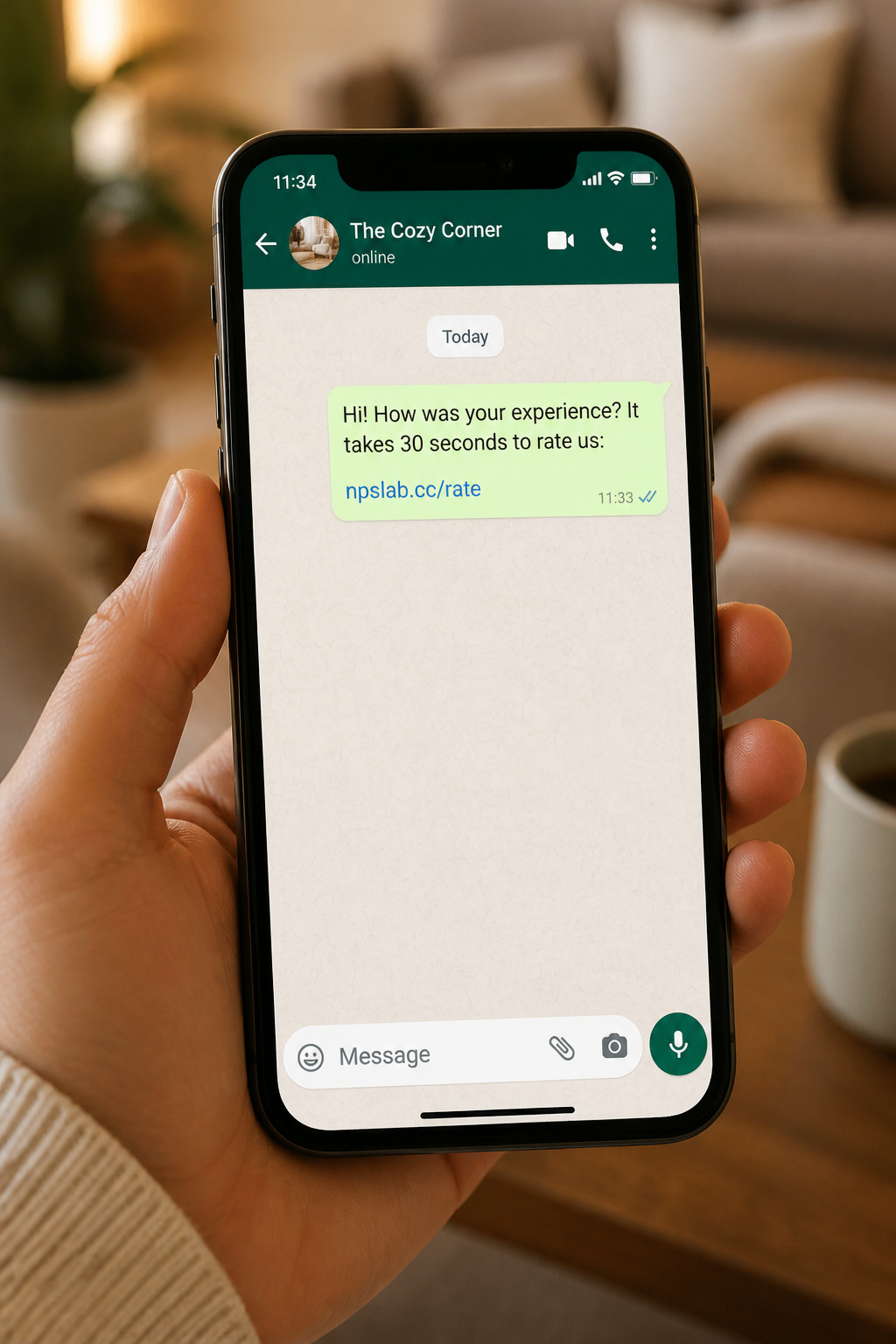
Right after an installation or a support ticket, the subscriber gets the NPS survey on their phone — by WhatsApp, SMS or app — and answers the 0-to-10 score in seconds. A promoter turns into referrals and reputation; a detractor triggers an instant alert so retention can act and reverse the churn risk before the cancellation request.
What changes when you listen at the right moment
They found that 40% of complaints came from a single neighborhood with a router problem. They fixed it and NPS rose from 28 to 58 in eight months.
With detractor alerts and a 4-hour response, churn dropped from 5.2% to 2.8% per year and 78% of contacted detractors were retained.
The post-support survey revealed which technicians needed training. Service quality improved and NPS nearly tripled.
Built for those who run networks and regions
Real-time detractor alert
Low score? Retention is notified instantly by app push or email to act before the cancellation.
NPS by region and neighborhood
View satisfaction by location and point of presence. Prioritize CAPEX where dissatisfaction is highest.
NPS by technician
Identify which technicians drive the most satisfaction and which ones need training.
Post-install and post-support
Surveys triggered at the critical moments: 48h after installing and right after every ticket.
NPS for providers, no mystery
Why does telecom have the lowest NPS of any industry?
According to CustomerGauge, telecom has an average NPS of just 2, compared to 41 for retail and 19 for financial services. Customers have high expectations (internet is essential) but frequently face instability, slow support and a lack of transparency. ISPs that invest in customer experience can stand out significantly.
How does NPS help reduce churn for providers?
Research from Telecompetitor shows that ISPs with an NPS above 61 have churn below 3% per year, while those with a low NPS exceed 4%. Close-the-loop — contacting detractors quickly — cuts churn by up to 2.3% per year, because you identify and resolve problems before the customer decides to cancel.
When should I send the NPS survey to the subscriber?
At the critical moments: 48h after installation, to ensure a positive initial experience; right after every support ticket, to assess support quality; proactively each month, to catch network problems before the complaint; and before price increases, because informed customers are 2x more likely to stay.
How do I identify network problems by region?
NPSLab lets you segment NPS by any criteria — region, neighborhood, plan or connection type. This way you can tell whether dissatisfaction is localized (infrastructure) or widespread (support, price), which optimizes your CAPEX investments.
Start reducing your provider’s churn today
Set up your first survey in 5 minutes. Start free, no card.