Find out who will
leave before
re-enrollment.
NPS (Net Promoter Score) is the thermometer of parent and student satisfaction. NPSLab listens to the family at every stage of the school year, spots who is at risk and gives you time to act before the renewal decision.
Losing a student costs far more than one tuition payment.
The re-enrollment decision is concentrated between September and December — and with 98% of schools raising tuition, any dissatisfaction becomes a trigger to look for a cheaper alternative. NPS is the early warning system: it captures the frustration of parents and students while there is still time to turn it around.
A dissatisfied family rarely complains — it just announces it is leaving.
By the time the decision not to renew reaches the front office, the re-enrollment window has already closed and there is nothing left to do.
Feedback that arrives late
You only find out that communication from coordination was bothering parents once the family has already announced it will not renew enrollment.
Silent attrition
Most departures are due to tight budgets, not dissatisfaction with teaching. Satisfied families, however, prioritize tuition even when money is short.
Critical seasonality
The re-enrollment decision is concentrated between September and December. Without measuring beforehand, late feedback leaves no room for corrective action.
Hear the family at every stage of the school year
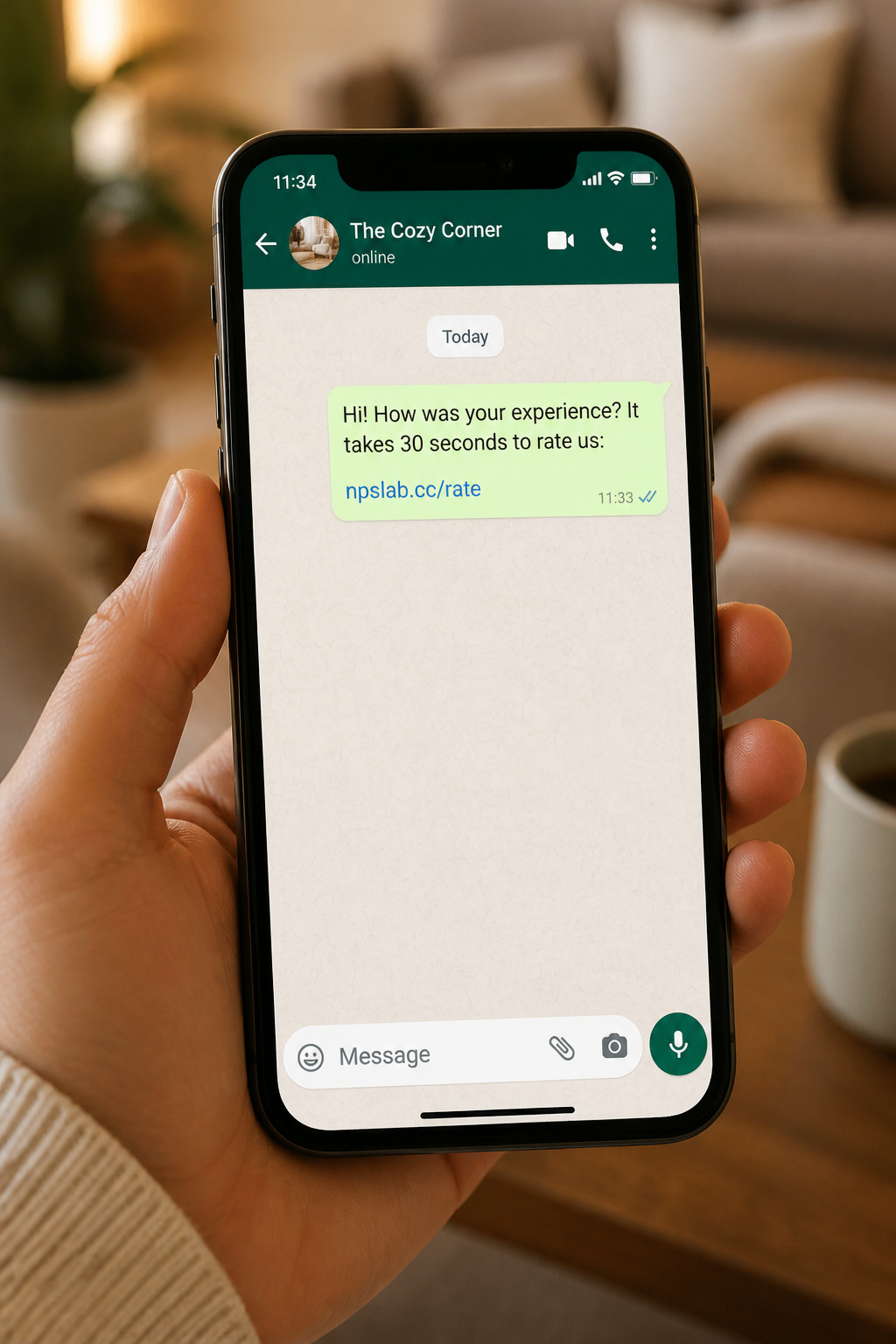
NPSLab sends the right survey at the right moment — by WhatsApp, email, SMS or a QR code in the school planner.
Enrollment
Capture the first impression of new students: welcome, front office and expectations.
Onboarding
The first 90 days are critical. Rate welcome and communication before early attrition.
Mid-year
After meetings and report cards, measure the perception of teaching quality and teachers.
Pre-re-enrollment
The most critical moment: identify at-risk families before they decide not to renew.
By area
Coordination, front office, cafeteria and transportation rated separately. Know where to invest.
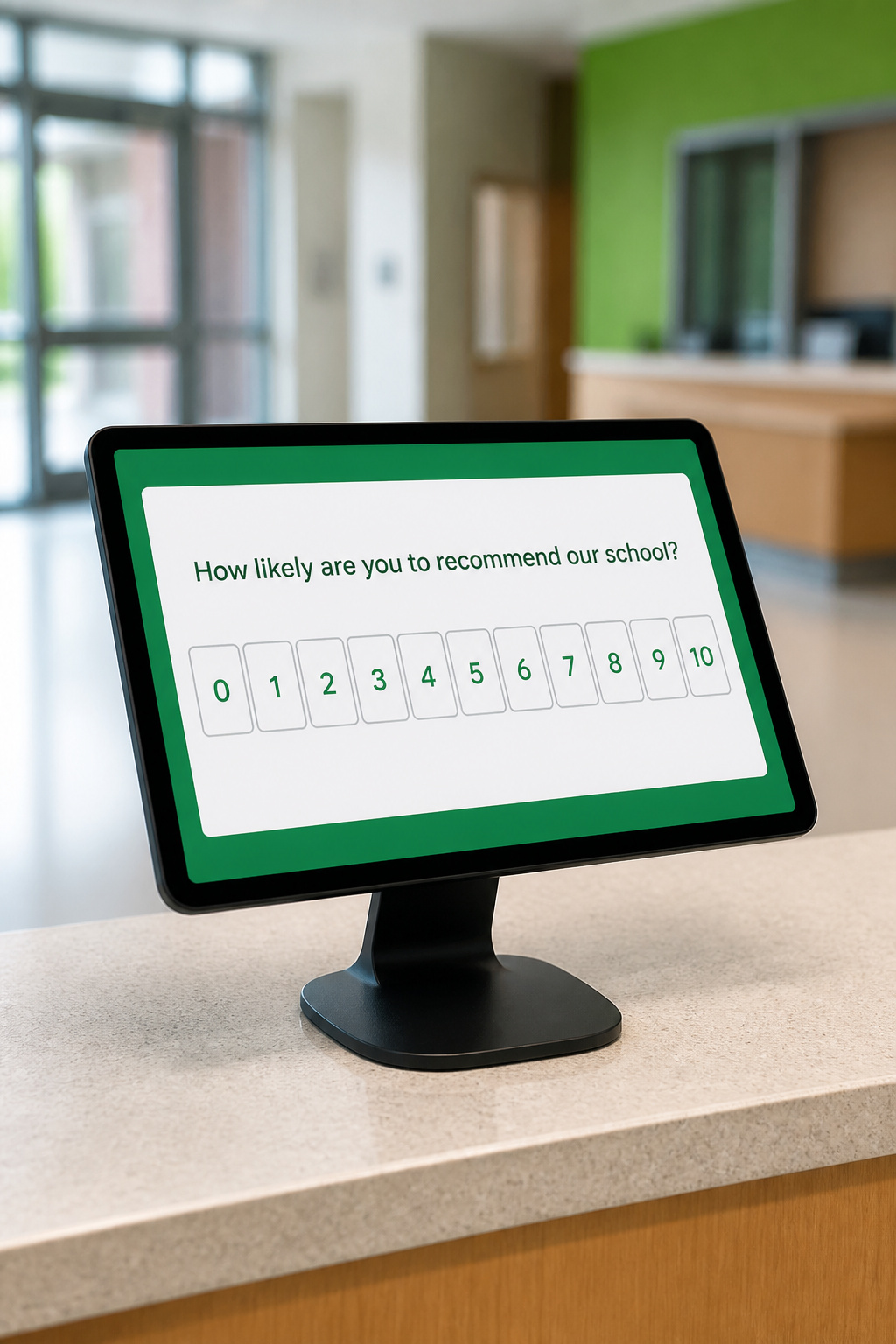
A tablet at the front office, and the family answers before leaving
At the school reception, a tablet displays the NPS survey on a 0-to-10 scale. Parents and students rate the experience in seconds throughout the school year — from onboarding to pre-re-enrollment. Satisfied families become promoters who refer the school; low scores trigger an instant alert so coordination can act and spot attrition risk before the renewal decision.
What changes when you listen at the right moment
Surveys revealed a flaw in front office communication. NPS rose from 42 to 68 in one school year and re-enrollment went from 78% to 91%.
82% of detractors contacted before re-enrollment renewed after their issues were resolved.
The pre-re-enrollment survey reversed 3 families that had already decided to leave. NPS rose from 55 to 76 in eight months.
Built to track the entire school year cycle
Attrition risk alert
A family with a low NPS? Coordination is notified instantly by app push or email to act before re-enrollment.
NPS by class and grade
View satisfaction by class, grade and shift. Find out whether the problem is localized or widespread.
NPS by area
Coordination, front office, cafeteria and transportation evaluated separately. Direct your investment with precision.
School year timeline
Onboarding, mid-year, pre-re-enrollment and post-enrollment in a single dashboard, in real time.
NPS for schools, no mystery
Why do private schools need to measure NPS?
With 98% of schools raising tuition in 2025 (average of 8-10%), parents are more demanding about the value they receive. Measuring NPS lets you spot dissatisfaction before it turns into cancellations. On top of that, 3 out of 4 Brazilian families are in debt, so any dissatisfaction can be the trigger to look for cheaper alternatives.
What is the difference between attrition from dissatisfaction and from financial issues?
In private schools, most attrition is related to financial issues, not teaching. However, satisfied families make more of an effort to keep their children at the school. NPS helps build that emotional bond that makes families prioritize tuition even on a tight budget.
When should I run an NPS survey at school?
We recommend an annual cycle: (1) February — post-enrollment, first impressions; (2) March — onboarding, the first 90 days; (3) July — first semester evaluation; (4) September/October — pre-re-enrollment, the most critical moment. In addition, run point-in-time surveys after events such as parent-teacher meetings.
How do I segment NPS by class or area?
NPSLab lets you create custom fields (class, grade, shift) and evaluate specific areas (coordination, front office, cafeteria, transportation). This way you can tell whether a problem is localized in a specific class or widespread across the whole school.
Your next re-enrollment season starts today
Set up your first survey in 5 minutes. Start free, no card.